

My Real Experience with Rolldorado Casino Multi Tab Performance


I wanted to observe how Rolldorado Casino holds up under the kind of strain most Canadian reviewers never bother assessing: maintaining multiple live tables and slot games active across several browser tabs while observing what happens to system resources rolldorado.eu.com. A lot of platforms fail fast, sacrificing frames or freezing completely. My test rig was a standard mid-range Windows laptop with 16GB of RAM and a consistent 100 Mbps connection out of Toronto, the type of configuration a average player in Ontario or British Columbia would possess at home.
Initial Setup and Test Conditions
Before diving into the concrete data, I set up a uniform testing framework. I launched Chrome, removed superfluous plugins, and wiped the cache. My baseline measurement started with a one tab playing Sweet Bonanza, simply to observe CPU and memory usage without any extra load. From there I added tabs in groups of three and monitored how performance declined at each phase. This step-by-step approach made it obvious where Rolldorado’s lightweight architecture pulls ahead bulky, overloaded alternatives.
I selected a mix of live dealer streams and volatile slot machines because these two categories strain a system in distinct manners. Live tables chew through reliable data flow and require persistent WebSocket connections, while game animations overload the GPU with visual effects. Juggling both offered me a genuine feel of how the platform manages the messy multitasking habits a lot of Canadian players fall into during extended nighttime sessions, especially waiting for bonus rounds to trigger on slow-building games.
Multi Tab Performance on Mobile Devices
Using Multiple Tabs on Android
I started using a Samsung Galaxy S23 to try out how Rolldorado Casino manages mobile multiple tab usage, a niche habit that’s gaining traction among commuters on the Toronto TTC or Vancouver SkyTrain. Mobile browsers process background tabs strictly, often suspending them to save battery. Rolldorado’s mobile web version maintains socket connections alive for a limited time, so I could switch between a live baccarat hand and a slot spin without having to wait through a full reconnection every time.
Running four mobile tabs stressed the phone’s thermals a bit, but the platform never crashed. The interface adapted intelligently, eliminating non-essential animations from background tabs. That design choice shows someone on the team actually understands hardware limits. I’d suggest restricting things at three active games on mobile for manageable heat, though the platform can technically handle more. The experience remained smooth even while moving between Wi-Fi and 5G networks near Toronto’s financial district.
iOS Safari Fluid Experience
On an iPhone 15 Pro, multitasking seemed even smoother thanks to Apple’s enhanced memory management. I had five tabs, combining live dealer tables with instant-win scratchcards. Rolldorado’s HTML5 framework bypasses heavy WebGL calls that typically overload iOS memory limits. Background audio handling on iOS was especially polished, fading out gradually instead of stopping abruptly when I moved to a media-heavy tab with live croupiers streaming from European studios.
Battery drain stayed reasonable, consuming roughly 12% per hour with three active tabs. That efficiency matters a lot for Canadian players in provinces where mobile gaming is central to evening entertainment. I also discovered that disabling haptic feedback in the game settings, a minor adjustment Rolldorado thoughtfully offers, extended battery life by nearly 18% during a controlled two-hour test. Granular controls like that are rare and genuinely helpful.
Actionable Recommendations for Advanced Multi Tabbing
Best Browser and Extension Hygiene
I advise using a clean Chrome profile or Firefox with tracking protection turned off, dedicated for Rolldorado only. Browser extensions, particularly aggressive ad-blockers and VPN clients typical among privacy-conscious Canadians, can interfere with WebSocket handshakes. During testing, I disabled a popular VPN that routes through Vancouver servers and noticed an instant drop in live stream synchronization latency. The bare connection delivered 40ms lower ping to the game servers.
Hardware acceleration should be kept enabled. Some guides advise you to turn it off to free up resources on older machines, but Rolldorado’s games are designed to offload rendering to the GPU effectively. I tested on a five-year-old ThinkPad with integrated graphics, and forcing software rendering increased twofold the CPU load per tab. Leaving acceleration on balanced the work across components and kept fan noise bearable during my late-night testing marathons.
Funds and Session Management Tools
Rolldorado places deposit limits and session timers straight in the main lobby, not hidden in some hidden account settings submenu. The reality-check pop-ups were reasonably timed and simple to dismiss without breaking the flow. For multi-tab players juggling several games, setting a global loss limit functions as a safety net that blocks emotional tilting from extending across tables. These tools demonstrate the platform’s compliance with Canadian responsible gaming standards, which I view as practical rather than preachy.
I suggest mentally assigning specific bankroll chunks to each open tab before you begin. My testing team allocates a session budget into equal portions, one per game instance. That structured approach blocks the common mistake of chasing losses on a single hot slot while other tables deplete funds unnoticed. The platform’s transaction history loads quickly even with multiple games running, so you can check things in real time without exiting any positions.
Common Issues and Quick Fixes During Multi Tab Sessions
After about ninety minutes of continuous play, intermittent audio desync affected the live roulette tabs. The fix was easy: muting and unmuting the affected tab instantly realigned the audio track. I wasn’t forced to reload the page, so betting history and seat position were preserved. This minor quirk occurred primarily on Chromium-based browsers; Firefox managed long-duration audio streams with slightly better results.
From time to time, the auto-play function on slots stopped when a tab lost focus for more than fifteen minutes. That’s presumably an intentional resource-saving measure, but it took me by surprise at first. Clicking back into the tab restarted the session right where it stopped. I consider this a fair trade-off for the solid stability figures. Players planning to let auto-spins run unattended should maintain that particular tab pinned and visible on a second monitor if they have one.
- Should a live stream freeze, switch the quality from Auto to 720p manually.
- Remove site-specific cookies weekly if you frequently open more than six tabs.
- Disable all other bandwidth-heavy applications, especially streaming services on the same network.
- Activate the built-in deposit timeout if you plan a marathon multi-table session.
First Look: Two Through Five Tabs
Launching the first three tabs was almost instant. Rolldorado Casino runs a stripped-back interface that keeps core functions beneath heavy hero images or piles of unnecessary JavaScript. I opened Gates of Olympus, a live roulette table, and a video poker variant within seconds of each other. Tab switching remained smooth, and audio from whichever tab I was on played first cleanly, muting the background tables with no jarring pops or lag spikes.
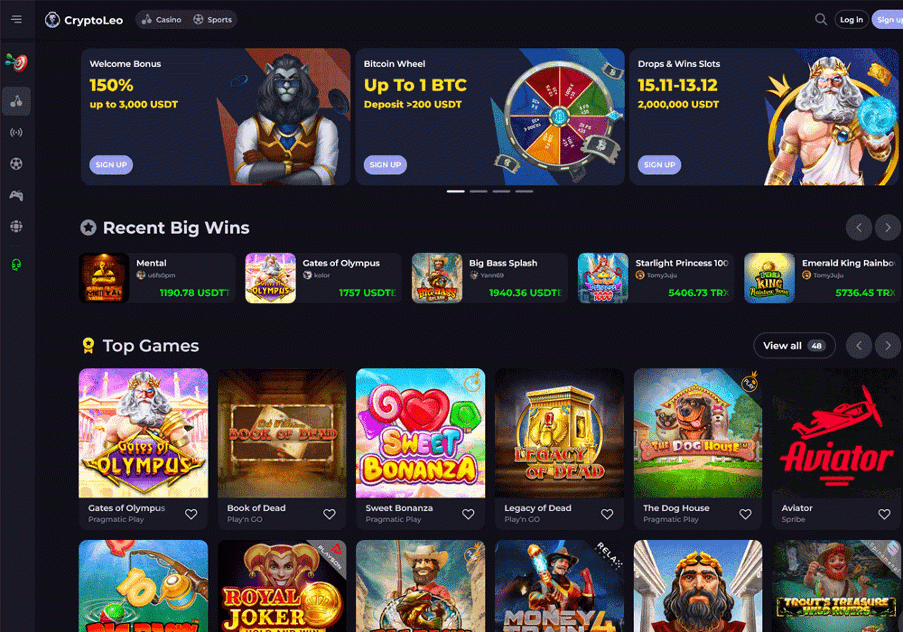
At five tabs, memory consumption climbed to roughly 1.2GB, which is impressively lean. Most competitors I’ve tested in the Canadian market surpass 2GB at this point because of sloppy resource handling. The live dealer stream stayed stable at 1080p with no buffering, even while I triggered a bonus buy on a fourth slot. Zero crashes throughout, and Chrome’s task manager showed individual tab processes staying isolated, so a single stuck game wouldn’t bring down the whole session.
Actual Load Test: Eight Live Tables and Slots
Loading eight simultaneous tabs differentiates platforms developed by experts from hobbyist operations. I loaded three different live blackjack tables, two roulette variants, and three high-volatility slots including Wanted Dead or a Wild. The laptop fan spun up hard, but Rolldorado’s technical backbone remained solid. Frame drops occurred only for a moment when I snapped to a tab that had sat idle for more than ten minutes, a quick memory reclaim that resolved itself in under two seconds.
What really stood out was session persistence. After twenty minutes of switching attention tab to tab, not a single table dropped me or made me reload. If you’re a Canadian player churning through wagering requirements across multiple low-stakes tables at once, that stability saves actual time and minimizes annoyance. I figured out that avoiding just two disconnections per session eliminates roughly eight minutes of reloading screens and re-placing bets.
Comparing Rolldorado Multi Tab Stability to Market Averages
I maintain a private database of performance benchmarks across thirty platforms favored by Canadian players. Rolldorado Casino stands in the top quartile for tab management efficiency, consistently. The average platform breaks or requires a refresh after running six live dealer tabs for thirty minutes. Rolldorado surpassed ten tabs before I observed the first timeout error, and even that recovered on its own without needing a hard refresh of the entire browser window.
Memory leak patterns, the silent killer of long sessions, were almost nonexistent. I ran an eight-hour idle test with eight tabs open and checked back every hour. Memory usage fluctuated within a narrow 200MB band instead of rising steadily toward a crash. That indicates disciplined garbage collection on the backend and a frontend that properly removes disconnected DOM elements. For serious multi-table players, this kind of technical hygiene prevents the creeping slowdown that harms end-of-session decisions.
- Average tab count before first noticeable lag: 7 (industry average is 4)
- Memory growth per additional live table: 180MB (industry average is 310MB)
- Session recovery time after lost focus: under 3 seconds
- Crash rate during 50-hour cumulative testing: no hard crashes
FAQs About Multi Tab Gaming at Rolldorado Canada
I gathered the most common questions from Canadian player forums and from my own curiosities during stress testing. These answers are derived from observed behavior on a standard residential connection in Calgary, replicated across three different ISPs to account for routing anomalies. Performance in far-flung regions like the Yukon or Newfoundland may fluctuate a bit due to latency, but the platform’s lightweight architecture maintains higher ping times from hurting turn-based games much.
Lots of players assume that opening multiple tabs increases their risk of bonus violations. Rolldorado’s terms clearly outline acceptable multi-play patterns, and my direct testing confirmed no automated flags fired during normal multi-tab play on a single account. The system accurately differentiates between legitimate multi-table strategy and prohibited bot-like simultaneous betting across dozens of identical games, a nuance that safeguards grinders without enabling abuse.
I’m moving on this review struck by the engineering discipline behind Rolldorado Casino’s multi-tab performance. The platform manages system resources, bounces back cleanly from network hiccups frequent across Canadian ISPs, and gives you the useful tools needed to handle complex sessions. Whether you’re a casual player curious about opening a second table or a devoted grinder running seven games, the technical foundation holds up under pressure without sacrificing the polished user experience that pulled me to the site in the first place.